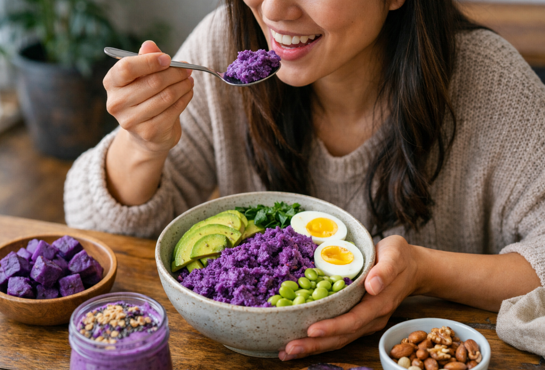
Some foods catch the eye first, then earn their place through substance. Ube belongs in that category. Its deep violet color makes it memorable, though color alone is not the reason people keep searching for it. Readers usually want something more concrete: what ube is, what nutrients it contains, whether it fits into a balanced diet, how to cook it without ruining its texture, how it compares with sweet potato or taro, and how to use it beyond sugary desserts. Those are practical questions, not passing curiosities. Ube, also known as purple yam and commonly linked with the species Dioscorea alata, is a starchy tuber eaten in many parts of Asia and increasingly appreciated in the United States for both flavor and culinary versatility. Reliable nutrition references describe it as a source of carbohydrates, fiber, potassium, and vitamin C, while research on purple yams also highlights their anthocyanin content, the natural pigments that contribute to the purple flesh. That combination explains why ube attracts attention from people who care about both taste and nutritional value. It can fit into a routine centered on whole foods, provided it is used with a little common sense. Ube is still a starchy root vegetable, which means it delivers energy mainly through carbohydrates. That is not a flaw. It simply means portion size, cooking method, and meal balance matter. Think of it less as a miracle food, more as a solid brick in the wall of a well-built diet. When paired with protein, fruit, vegetables, legumes, yogurt, eggs, tofu, fish, or nuts, ube nutrition becomes much more relevant in real life. The most useful way to look at it is not “Does ube fix everything?” but “How can this purple yam add nutrients, variety, and pleasure to meals I already eat?” That question leads to a far better answer, since food choices work best when they are sustainable, enjoyable, and easy to repeat. Available nutrition sources note that cooked ube provides carbohydrates, some fiber, potassium, and vitamin C, while scientific papers on purple yams support the idea that their pigment-rich profile includes anthocyanins.
What exactly is ube and why are people so interested in it?
Ube is a purple yam, not a purple sweet potato, not taro, not a generic “purple root.” That distinction matters because many foods with a violet color get grouped together online, which creates confusion around flavor, texture, and nutrition. Ube usually has a mildly sweet, vanilla-like, nutty profile with an earthy base. Its texture can become creamy when steamed or boiled, though the exact result depends on the variety and preparation. The visual appeal plays a major role in its popularity, though the current interest goes beyond social media aesthetics. Consumers want foods that look inviting without feeling empty from a nutritional standpoint. Ube answers that desire rather well. Its color comes from plant pigments, and those pigments are one reason nutrition researchers pay attention to purple tubers. Anthocyanins are the same broad class of compounds associated with many purple and blue plant foods. In food science, they are often discussed for their antioxidant activity, though that should not be exaggerated into simplistic claims. Eating anthocyanin-rich foods is one useful dietary habit among many, not a shortcut that replaces an overall healthy pattern.
People are also interested in ube because it widens the menu without making meals complicated. Many nutritious staples become boring when prepared the same way every week. Ube brings variety, which is underrated in nutrition conversations. A varied plate can improve diet quality simply because it keeps someone engaged enough to cook at home and explore better ingredients. Ube can be mashed, roasted, steamed, turned into porridge, blended into smoothies, folded into pancake batter, baked into breads, or used in a savory bowl with greens and protein. That flexibility gives it a practical advantage. It is colorful enough to feel special, though simple enough to work like any other starchy base. For readers trying to improve eating habits without chasing rigid rules, that matters more than hype. The most helpful view is to treat purple yam benefits as part of a pattern: color diversity, plant variety, fiber intake, home cooking, and moderate portions. That is where the real nutritional value becomes visible.
What nutrients does ube bring to the plate?
The nutritional profile of ube is easy to understand once you strip away the noise. It is primarily a starchy carbohydrate source, which means it can help fuel the body in the same broad category as potatoes, sweet potatoes, cassava, rice, or other staples. According to nutrition summaries, cooked ube also provides fiber, potassium, and vitamin C. Fiber matters because it helps make meals more satisfying and supports a better overall dietary pattern. Potassium matters because many people do not consume enough of it, especially when their food routine leans heavily on ultra-processed products. Vitamin C matters because it supports normal physiological functions and is a well-known essential nutrient. None of that turns ube into a nutritional superhero wearing a cape. It simply means it has more to offer than color and sweetness.
Its purple pigments add another layer of interest. Research on Dioscorea alata shows that purple yams contain anthocyanins, which are natural compounds responsible for the purple hue. In plain terms, the color signals that the tuber contains more than starch alone. Food researchers study these compounds because they contribute to the antioxidant profile of many plant foods. The safest takeaway is this: eating naturally colorful foods can be a smart way to diversify the intake of beneficial plant compounds. That message is useful without becoming exaggerated. Ube does not need inflated claims to be worth eating. It already brings a meaningful combination of energy, micronutrients, fiber, and color-related phytochemicals. If your meals often look beige from edge to edge, ube can act like a splash of paint on a blank wall, making the plate more vibrant while still serving a real nutritional role.
Why fiber and starch are both important
Some readers see the word “starch” and assume a food must be unhealthy. That shortcut leads to poor conclusions. Starchy foods are central to many balanced eating patterns around the world. The real question is not whether a food contains starch, but how it is prepared, what it is eaten with, and how often it appears in the context of the whole diet. Ube provides carbohydrate energy that can be useful for active people, students, busy workers, or anyone who wants meals that satisfy. The fiber content helps slow the eating experience and makes the food more substantial than a refined sweet snack. That difference is important. A bowl built around steamed or roasted ube with protein and vegetables is not nutritionally equivalent to a heavily sweetened dessert made with sugar, cream, and syrups, even if both contain ube.
Why the purple color matters without becoming a sales pitch
Purple foods often gain attention because they look rare, though their real interest lies in what the pigments may indicate. Anthocyanins are widely studied in plant foods, yet they should be discussed carefully. It is reasonable to say that purple yam contains anthocyanins and that anthocyanin-rich foods are valued in nutrition science for their antioxidant properties. It is not reasonable to turn that into sweeping promises. For a reader who wants a useful answer, the balanced message is enough: ube is an appealing way to eat a colorful plant food, and colorful plant foods generally support a varied, higher-quality diet. That is a realistic benefit, one that respects both common sense and the evidence available.
How can you eat ube without turning it into a sugar bomb?
This is one of the most important practical questions. In American food culture, ube often appears first through desserts: ice cream, pastries, cakes, cookies, jams, syrups, sweet lattes, or heavily sweetened spreads. Those foods can be enjoyable, though they are not the best examples if your goal is to benefit from ube’s nutritional value. The smarter path is to start with simpler preparations that let the root vegetable remain the main ingredient. Steamed ube, mashed ube, roasted cubes, ube porridge, or unsweetened ube puree can all work well. Once you begin from that base, you control what gets added. A little cinnamon, yogurt, nuts, seeds, coconut, milk, oats, or fruit can complement the flavor without drowning it in sugar.
That matters because preparation can change the nutritional reality more than the ingredient itself. A plain root vegetable behaves differently in the body than a dessert stacked with sugar and fat. Readers who want to enjoy ube benefits should think in terms of meal structure. Use it at breakfast with Greek yogurt and berries. Add it to a lunch bowl with tofu or chicken. Serve it as a side instead of fries. Blend it into a smoothie with banana, milk, and oats, while keeping sweeteners light. Bake it into muffins where the batter still relies on recognizable ingredients. The goal is not to ban sweet treats. It is to stop treating dessert-style versions as the only way to eat ube. Once you make that shift, ube becomes a practical ingredient rather than a novelty. It can support satiety, variety, and a more colorful weekly menu while still tasting comforting and familiar.
See also: How to Choose a Reliable Gas Turbine Service Provider for Maximum Efficiency
Is ube healthier than sweet potato, taro, or regular potato?
Many readers search this because they want a winner. Nutrition rarely works like that. Ube, sweet potato, taro, and potato all have useful qualities. The best choice depends on what you need from the meal. Sweet potatoes are often highlighted for beta carotene, especially orange-fleshed varieties. Potatoes are valued for potassium, versatility, and affordability. Taro brings its own texture and culinary role. Ube stands out for its flavor profile, color, and anthocyanin content, alongside its contribution of carbohydrates, fiber, potassium, and vitamin C. That means the useful question is not “Which one is universally best?” but “Which one helps me create a better meal today?”
If the aim is color diversity and anthocyanin intake, ube has a strong point in its favor. If the aim is vitamin A from orange flesh, sweet potato may offer something different. If the aim is simply having a filling, whole-food carbohydrate source, all of them can work. That is why smart eating patterns rely on rotation rather than obsession. Rotating root vegetables broadens the nutrient mix and reduces boredom. From a practical perspective, ube earns its place not because it invalidates other staples, but because it adds one more nourishing option. A weekly routine that includes oats, beans, greens, fruit, potatoes, rice, and occasional ube is usually stronger than a routine built on one “perfect” ingredient repeated endlessly. Food monotony is often the silent enemy of consistency.
What is the best way to cook ube for flavor and texture?
Cooking method shapes the eating experience more than many people expect. Boiling or steaming is usually the easiest place to start. It preserves the ingredient’s identity, softens the flesh, and makes mashing or pureeing simple. Roasting can deepen flavor and bring a drier, more concentrated texture. Baking works well when you want to use ube in breads, pancakes, or snack bars. The key is not to overcomplicate the first attempt. Ube is easier to appreciate when you taste the root itself before covering it with sweeteners or strong flavorings. Once you know its baseline flavor, it becomes easier to pair intelligently.
Texture also depends on what the meal needs. For a breakfast bowl, a smooth mash can be ideal. For a grain bowl or savory plate, roasted cubes hold their shape better. For a creamy blended drink, cooked ube puree integrates more evenly. If you buy frozen grated ube or ready-made puree, the ingredient can still be useful, though you should check whether sugar or flavorings were added. That single habit prevents a lot of confusion. People often think they are evaluating the nutrition of ube itself when they are actually evaluating a sweetened processed product based on ube. The distinction matters. Whole or minimally processed versions usually make it much easier to benefit from the natural qualities of the tuber.
Pairings that make nutritional sense
Ube works best when the rest of the plate balances it. Pair it with eggs for breakfast, edamame for a snack bowl, yogurt and nuts for a filling morning meal, salmon and greens for dinner, or beans and avocado for a plant-based lunch. These combinations help transform a starchy root into a more complete meal. Protein, fiber, and fat from other ingredients can improve satisfaction and make the meal more stable and useful in daily life. That is often what readers really want: not a theory, but a way to build a plate that feels good and keeps them full.
Common mistakes that make ube less interesting
Two mistakes show up often. The first is oversweetening it, which flattens the ingredient and makes everything taste like sugar with purple color. The second is underseasoning it, which can leave the flavor feeling muted. Ube usually responds well to gentle support: cinnamon, vanilla, coconut, a pinch of salt, yogurt, toasted nuts, or fruit with some acidity. Those pairings keep the flavor clear while making the dish feel complete. A little balance goes a long way.
How often can ube fit into a balanced diet?
For most people, ube can fit into a balanced routine as one of several rotating carbohydrate sources. The smartest frequency depends on total diet quality, activity level, medical needs, and portion size. A physically active person may include starchy roots more often than someone who prefers lighter meals. Someone trying to eat more whole foods may use ube a few times a week as a replacement for refined snacks or heavily processed sides. In both cases, the principle stays the same: use ube as part of a varied diet, not as a nutritional mascot placed on a pedestal.
That balanced approach usually delivers the best long-term outcome. Readers searching for how to enjoy the nutritional benefits of ube do not need drama. They need a calm answer grounded in reality. Ube is worth eating because it is flavorful, versatile, colorful, and nutritionally respectable. It provides useful carbohydrates, some fiber, potassium, vitamin C, and purple pigments associated with anthocyanins. It can make meals more interesting, which often helps healthy habits last. It can also become a sugar-heavy treat if prepared that way. The difference lies less in the yam itself, more in the choices around it. That is the kind of detail that actually helps someone at the grocery store, in the kitchen, or while planning next week’s meals.
A purple staple worth understanding
Ube deserves attention for more than its color. It can bring variety, fiber, potassium, vitamin C, and naturally occurring anthocyanins to a meal, while offering a flavor that feels both comforting and distinctive. Used in simple preparations, paired with balanced ingredients, it becomes much more than a trendy purple dessert. If you were curious about whether ube has a real place in a thoughtful diet, the answer is yes. The best part is that it does not ask for perfection, only a little curiosity and a plate built with intention.