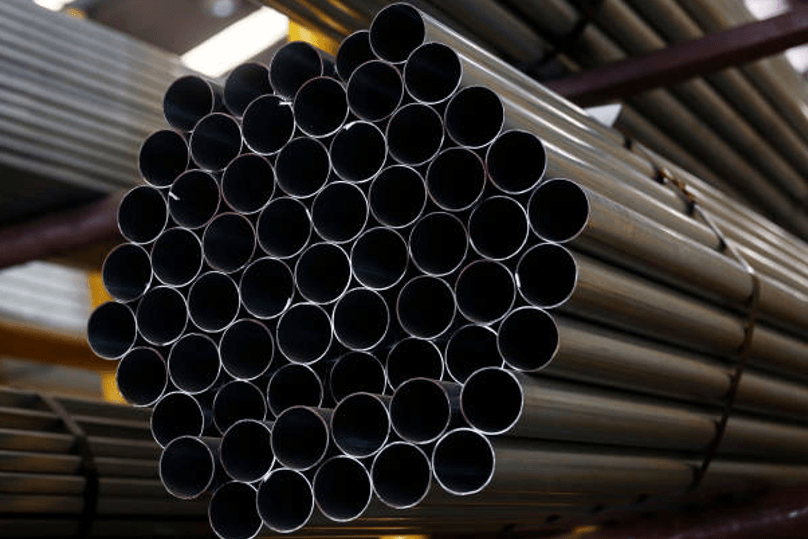
Procurement teams at chemical processing facilities often carry the same stainless grade from one purchasing cycle to the next. It feels efficient. It avoids the internal friction of reassessment. But when process conditions shift, when cleaning agents get stronger, or when operating temperatures climb, that familiar grade may no longer be doing what you need it to do.
The gap between assumed performance and actual corrosion behavior is where tube failures quietly begin. Plants sourcing 317l stainless steel tube gain access to a grade engineered with higher molybdenum and nitrogen content, giving it measurably better resistance in chloride-laden and acidic environments than standard 304 or 316. For facilities running aggressive chemistries, that distinction is not a minor upgrade. It can be the difference between scheduled maintenance and an unplanned shutdown.
When Legacy Grades Stop Keeping Up With What’s Running Through the Lines
Procurement Habit vs. Process Reality: There is a reasonable explanation for why plants keep ordering the same grades year after year. Approved vendor lists, historical specs, and supplier familiarity all create inertia to explore other tube options. But those legacy decisions were made under different operating conditions. What worked a decade ago may be quietly failing now, one microcorrosion event at a time.
What Changing Process Chemistries Are Actually Doing to Tube Walls: Stronger cleaning-in-place agents, higher chloride concentrations, and temperature fluctuations in heat exchangers are not abstract risks. They accelerate pitting corrosion on tube walls, especially in grades not engineered for that combination. The result tends to surface as unexplained leaks rather than any identifiable design fault, which makes the root cause easy to miss.
The Chemistry Argument That Grade Selection Committees Often Overlook
Molybdenum Content and Its Role in Corrosion Defense: 317L carries a molybdenum content of 3 to 4 percent, compared to the 2 to 3 percent range found in standard 316L. That difference matters most in environments where chloride ions are present alongside other aggressive compounds. Higher molybdenum directly supports resistance to localized attack on tube surfaces, particularly under the fluctuating conditions common in petrochemical service.
Why Low Carbon Matters Beyond Just Weld Sensitivity: The “L” designation in 317L signals a low carbon specification, which limits sensitization during welding and thermal cycling. For tubing installed in heat exchangers or process lines that see repeated temperature changes, that low carbon chemistry reduces the risk of grain boundary precipitation. Plants that ignore this often discover the consequences at the weld joint long after installation.
Warning Patterns That Stainless Grade Charts Don’t Capture
Facilities running demanding process chemistries often experience early warning signs well before a full tube failure occurs. These patterns are easy to dismiss individually but become harder to ignore when they repeat. Reviewing them against your current grade selection may reveal that the issue is not process variability. It may simply be that the specified grade is not matched to what is running through the system.
- Surface pitting or discoloration on tube exteriors appearing outside scheduled inspection cycles, often indicating localized chemical attack that the grade cannot passivate against.
- Unexplained pressure drops across heat exchanger bundles traced back to internal tube wall thinning rather than fouling or scaling issues.
- Repeat failures at weld joints or tube-to-tubesheet connections suggesting inadequate corrosion margins in the base material or poor thermal stability.
- Process fluid contamination events that align with a change in cleaning chemical concentration or cycle frequency rather than any identifiable mechanical fault.
Matching Grade to Chemistry Before It Becomes Expensive: When these patterns show up once, they are often written off as anomalies. When they repeat, the cost conversation shifts from tubing replacement to unplanned downtime and production loss. The grade that served the plant well five years ago may simply no longer match what is running through the lines today.
See also: Business Growth Solutions 602043133 Online
Where 317L Fits in the Broader Alloy Selection Conversation
Comparing Performance Across Common Stainless Grades: 317L sits within the family of austenitic stainless steels, positioned above 316L in corrosion resistance but below more specialized nickel alloys. For applications where 316L is marginal and a full alloy upgrade is cost-prohibitive, 317L provides a practical step up. It suits sulfuric acid environments, phosphate process streams, and applications involving concentrated halide exposure particularly well.
Cost of the Wrong Grade vs. Cost of the Right One: A tubing selection that saves money at purchase often costs significantly more when factored over its service interval. Premature replacement, process contamination risk, and regulatory exposure in petrochemical environments all compound the original procurement savings. Specifying 317L where the chemistry demands it typically reduces total lifecycle cost rather than adding to it.
Where Process Chemistry Meets Procurement Discipline
Tube selection in corrosion-heavy environments is not a static decision. Process chemistries shift and grades that once performed adequately begin showing their limits in ways that are hard to trace back to a specification gap. Waiting for a failure to trigger a grade reassessment is the more expensive path. If your current stainless specification feels inherited rather than engineered, connect with a specialty distributor that carries tubing grades built around process demands, not procurement convenience.