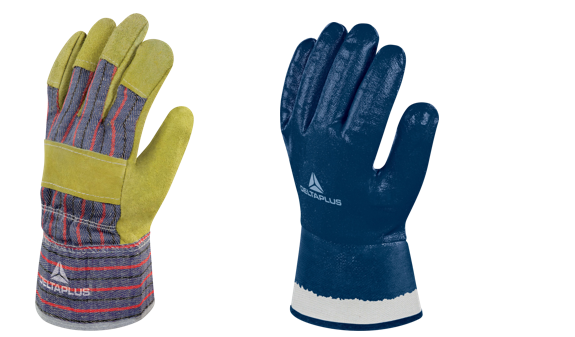
Hands are the most intricate tools in the human body, capable of fine motor control, strength, and dexterity. Yet, they are also the most exposed in workplaces ranging from laboratories to industrial sites. The science of safety gloves revolves around understanding hazards and engineering solutions to mitigate them without hindering performance. Advances in materials science, ergonomics, and surface engineering have made gloves more than just barriers; they are precision instruments designed to enhance grip, resist injury, and optimize task efficiency.
This blog delves into the scientific principles behind modern gloves, explaining how materials, design, and protection mechanisms converge to safeguard workers while maintaining functionality with high-performance gloves.
Material Engineering: Construction of Protection Barriers at the Molecular Level
The choice of materials is not random, and they represent a balance between mechanical resistance, chemical inertness, thermal performance, and comfort to the wearer, and they are designed to meet certain hazards.
● Synthetic Polymers and Elastomers
New gloves are founded on the application of polymers such as nitrile, polyurethane, and neoprene, which are chemically resistant, puncture-resistant, and elastic. The molecular structure of these polymers makes them flexible, permeable, tough, and capable of resisting solvents, oils, and rough surfaces through the use of gloves.
● Natural Rubber and Biopolymers
The natural materials, such as Latex and other natural materials, have extraordinary elasticity and touch sensitivity. Scientists are able to manipulate the strength of gloves by closely managing the cross-linking of the polymer to ensure that they do not compromise their flexibility. New biopolymers that are hypoallergenic reduce the chances of skin irritation and are also performance-effective.
● Composite and Reinforced Fabrics
Gloves are used with high-impact applications, cut-resistant applications, and other high-impact materials such as Kevlar, Dyneema, or stainless-steel fibers. These fibers are then either interwoven or laminated towards flexible matrices so that the gloves can absorb energy, be cut-resistant, and have dexterity.
Grip Science: 3D Friction Engineering to Precision and Safety
Grip science is a way that guarantees that gloves are not just protective but also promote the performance of the workers using biomechanical and material engineering concepts with advanced safety gloves.
● Micro-Textured Surfaces
Gloves have been designed with micro-textures that enhance friction in the hand tool interface. These have been scientifically designed textures so that they have the best grip when it is wet, greasy, or in case of sloppy conditions. Friction coefficients directly depend on surface geometry and coating chemistry.
● Ergonomic Curve and Distribution of Loads
Pre-curved fingers help decrease the muscular loads of the gloves by matching the geometry of the glove to that of the hand. This is a scientific method that reduces fatigue in the course of repetitive exercises and ensures safe handling of tools.
● High-Tech Coatings and Surface Treatments
Polyurethane/nitrile/latex Coatings have a high tactile sensitivity and grip. Surface engineering at the nano-scale guarantees that there is uniform pressure at the contact side, and thus, it neither slips nor has any imprecision in moving through assembly or laboratories.
See also: Reliable SEO Services 651598271 Online Growth
Mechanisms of Protection: Science into Safety
This is achieved through these mechanisms that make gloves engineered protection systems with quantifiable safety results as opposed to passive cover.
● Cut and Puncture Resistance
A scientific test, such as EN 388 standards, as well as ANSI/ISEA protocols, determines the capacity of a glove to withstand cuts, tears, and punctures. Fiber-level engineering is done to achieve the maximum toughness of the materials and layering plans to capture and attenuate the energy of sharp objects.
● Chemical and Thermal Resistant
Chemical permeability. Gloves based on selective permeability, wherein chains of polymer do not allow dangerous molecules to enter. In order to control heat transfer and avoid burns, thermal gloves have insulating layers, phase-change materials, or reflective coatings.
● Impact and Vibration Mitigation
Special padding and reinforcing areas. It involves the energy-dissipating material that will be used to lessen the impact of heavy tools, machinery, or repetitive vibration. Material science can be used to place these reinforcements at locations that are accurate without restraining the hand movements.
Testing and Certification: Assurance of Performance under the Microscope
Scientific testing is done to make sure that gloves provide consistent protection, which is the justification of the engineering principles that drive the materials and design of gloves.
● Standardized Mechanical Testing
This testing is done by simulation of real-world hazards to test abrasion, cut, puncture, and tear resistance in laboratories. Performance is measured in controlled experiments, which enable the measurement and scientific comparison of gloves.
● Ergonomic and Biomechanical Assessment
Hand movement examination and Grip force analysis are necessary to determine that the gloves do not hinder natural movement. Scientific modeling enables design modification to ensure maximum protection and dexterity.
Science-to-Task Specialized Innovations
Using the power of scientific advances, gloves have become not just another safety cover, but a smart device that can be used in the workplace nowadays with innovative gloves.
● Nanotechnology in Coatings
Coatings Nanotechnology in Coatings Coatings applications Nanoparticle-based Coatings Coatings have recently been applied to surfaces to enhance their chemical resistance, adherence, and durability without increasing their bulk. This enables gloves to have tactile sense and be wear-resistant.
● Multi-Hazard Protection by Composite Layering
Multi-layered constructions are based on cut-resistant fibres and chemical shielding or thermal insulation. Such a scientifically combined concept will provide the gloves with several hazard requirements at the same time.
Conclusion
The science of safety gloves combines the engineering of materials, the mechanics of grip, and protective innovations in order to design the equipment that is safe and efficient. Since the discovery of molecular-level design of polymers, the use of the ergonomic shape of fingers, and the application of specific coating, contemporary gloves are created to be accurate to avoid harm, improve functionality, and adhere to the strict requirements. When choosing gloves according to scientific principles, keeping them clean, and implementing new task-related solutions, the hand protection will no longer be a simple need but one of the strategic aspects of security at work.
Delta Plus provides a selection of solutions that can be used by organizations that require high-quality protective gloves that are scientifically engineered and can serve various industrial, laboratory, and professional requirements.