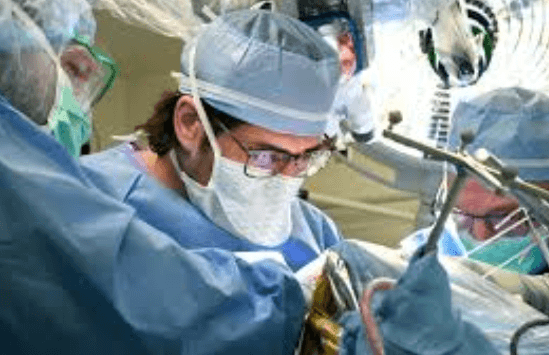
Brain and spinal cord injuries occupy a different category of personal injury litigation than other serious accident injuries because their consequences extend across the injured person’s entire remaining life in ways that require specialized expert analysis to document accurately. A serious traumatic brain injury in a 35-year-old Denver professional does not just produce medical costs. It produces a career interruption, a cognitive disability that affects every daily function, psychological consequences that pervade every relationship, and a lifetime care need whose present value must be calculated across decades. A cervical spinal cord injury produces a lifetime of attendant care, assistive technology, home modifications, and secondary medical complications whose cost structure must be projected across the injured person’s expected remaining lifespan. The damages cases for these injuries are unlike any other category of personal injury claim, and building them correctly requires a level of expert involvement that most other cases do not demand.
A spine injury lawyer and brain injury attorney who handles these cases in Colorado brings the life care planners, neurological experts, forensic economists, and neuropsychologists that the expert infrastructure demands, because the difference between a damages case built on these experts and one that is not is measured in the difference between a settlement that actually funds the injured person’s lifetime care and one that falls short within years.
Why Standard Imaging Misses Most TBIs
CT scans and standard MRI sequences detect structural damage: bleeding, fractures, and mass lesions. They do not detect the diffuse axonal injury that produces the cognitive and behavioral symptoms of mild to moderate traumatic brain injury. A clean emergency scan does not mean no injury. It means the specific type of damage that emergency imaging was designed to find was not present. Advanced imaging including diffusion tensor imaging and functional MRI, combined with comprehensive neuropsychological testing that measures actual cognitive function against population norms and the injured person’s own pre-injury baseline, is the clinical foundation for the TBI damages case. Without this expert documentation, the insurer’s clean scan argument is the only objective evidence in the case.
The AIS Classification and Its Role in Spinal Cord Injury Claims
The American Spinal Injury Association Impairment Scale classifies spinal cord injuries from AIS A, a complete injury with no motor or sensory function preserved below the injury level, through AIS E, indicating normal function. The classification at initial injury and the trajectory of neurological recovery through rehabilitation together determine the lifetime care needs and therefore the lifetime damages. A life care plan for an AIS A cervical injury projects a fundamentally different cost structure from one for an AIS D incomplete injury, and the forensic economic analysis that translates that plan into a present value figure must be built on the specific patient’s classification and functional trajectory, not on generic SCI statistics.
Life Care Planning at Colorado Healthcare Rates
Colorado’s healthcare costs, particularly in the Denver metro area and along the Front Range, exceed national averages in significant ways. A life care plan built on national cost data understates what the injured person will actually spend in Colorado throughout their life. The life care planner who projects future care costs must use Colorado-specific and regionally appropriate data to produce a damages figure that accurately represents the injured person’s actual financial exposure, because the gap between national average costs and actual Colorado costs compounds across decades into a significant undervaluation of the claim.
Colorado’s Non-Economic Damages Cap in Catastrophic Injury Cases
Colorado’s $250,000 non-economic damages cap, adjustable for inflation and subject to the court’s discretion to award up to $500,000 upon a finding of clear and convincing evidence, applies to brain and spinal cord injury cases alongside every other Colorado personal injury case. For injuries whose economic damages, meaning future medical costs and lost earning capacity, represent the largest component of the total damages picture, the cap’s effect may be limited in practical terms. But the non-economic damages cap still shapes how the damages presentation is structured and what evidence must be developed to support the higher tier. The Colorado Department of Human Services’ brain and spinal cord injury program resources describe the state support programs available to Coloradans with traumatic brain and spinal cord injuries, providing context for the long-term care needs that life care plans must address.